
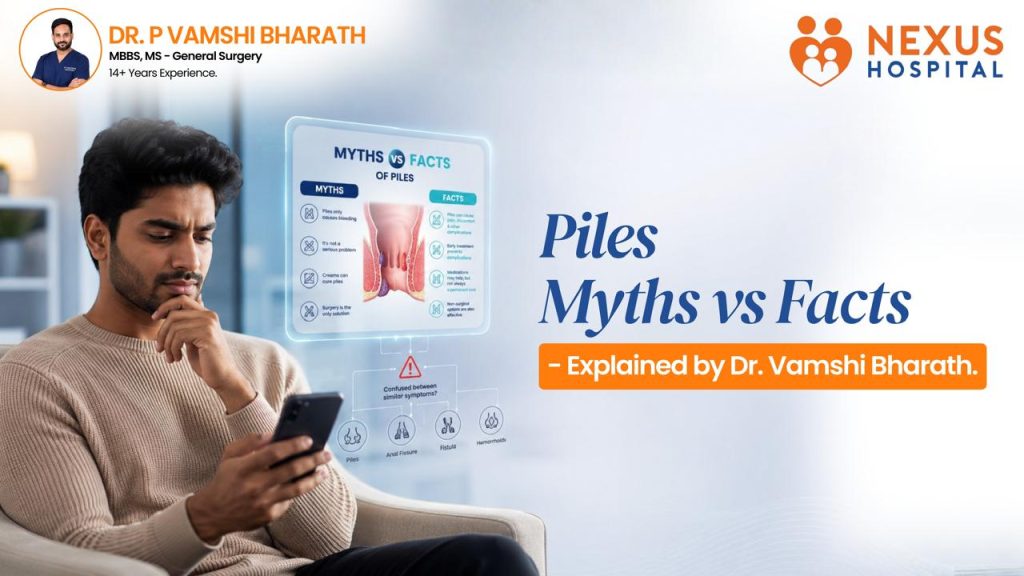
Understanding the Truth About Piles
Piles are among the most common anorectal conditions affecting millions of people worldwide, yet they remain widely misunderstood. Misconceptions about piles often cause patients to delay seeking medical care, depend on ineffective home remedies, or become unnecessarily anxious about treatment.
Many individuals silently suffer from symptoms such as bleeding during bowel movements, pain, itching, swelling, or discomfort while sitting because they believe piles will disappear on their own or that surgery is the only treatment option available.
The reality is that piles can often be effectively managed when diagnosed early, and modern treatment options have made recovery easier and more comfortable than ever before.
To help patients separate facts from fiction, Dr. P. Vamshi Bharath shares insights into some of the most common myths associated with piles and explains what patients should really know about this condition.
What Are Piles?
Piles, also known as hemorrhoids, are swollen and enlarged blood vessels located in the lower rectum or around the anus. They can develop due to increased pressure in the anal region and may occur internally or externally.
Common symptoms include:
- Bleeding during bowel movements
- Pain or discomfort around the anus
- Itching and irritation
- Swelling near the anal opening
- Mucus discharge
- A feeling of incomplete bowel evacuation
The severity of symptoms varies from person to person, making timely medical evaluation important for appropriate treatment.
Myth 1: Piles Only Affect Older People
Fact: Piles Can Occur at Any Age
One of the biggest misconceptions is that piles only develop in elderly individuals. Although aging can weaken supporting tissues around the rectum, piles are increasingly being diagnosed in younger adults as well.
Several lifestyle factors contribute to the development of piles, including:
- Sedentary habits
- Low-fiber diets
- Obesity
- Chronic constipation
- Prolonged sitting
- Pregnancy
- Heavy lifting
People in their twenties and thirties may also experience hemorrhoids, especially if they have unhealthy bowel habits.
Myth 2: Spicy Food Directly Causes Piles
Fact: Spicy Foods May Worsen Symptoms but Usually Do Not Cause Piles
Many people believe eating spicy food is the primary reason for developing piles. While spicy foods can increase irritation and discomfort in individuals who already have hemorrhoids, they are not considered a direct cause.
The more significant contributors include:
- Chronic constipation
- Excessive straining during bowel movements
- Inadequate water intake
- Lack of dietary fiber
- Sitting on the toilet for extended periods
A balanced diet rich in fruits, vegetables, and whole grains helps maintain regular bowel movements and supports overall digestive health.
Myth 3: Piles Always Require Surgery
Fact: Not Every Patient Needs an Operation
Perhaps the most common fear among patients is that piles inevitably lead to surgery.
Fortunately, treatment depends on the stage and severity of the condition.
Mild cases may improve with:
- Dietary modifications
- Increased water intake
- Stool softeners
- Lifestyle changes
- Medications prescribed by a doctor
Advanced cases may require minimally invasive procedures or surgery. Patients searching for the best piles surgeon in Nallagandla often seek specialists experienced in recommending the least invasive yet most effective treatment option.
Early consultation can often prevent progression and reduce the need for extensive surgical intervention.
Myth 4: Bleeding During Bowel Movements Always Means Piles
Fact: Rectal Bleeding Can Have Multiple Causes
Although bleeding is a common symptom of hemorrhoids, it should never be ignored.
Other possible causes include:
- Anal fissures
- Polyps
- Inflammatory bowel disease
- Infections
- Colorectal tumors
Accurate diagnosis is essential because treatment varies depending on the underlying condition.
Anyone experiencing persistent bleeding should seek professional evaluation instead of assuming piles are the cause.
Myth 5: Home Remedies Can Permanently Cure Piles
Fact: Home Remedies Usually Provide Temporary Relief
Warm sitz baths, dietary adjustments, and over-the-counter creams may reduce discomfort temporarily.
However, these measures do not permanently eliminate enlarged hemorrhoidal tissue, particularly in moderate to severe cases.
Ignoring symptoms for prolonged periods may lead to complications such as:
- Persistent bleeding
- Thrombosed hemorrhoids
- Prolapse
- Chronic pain
- Anemia due to repeated blood loss
Seeking expert guidance ensures timely treatment and better long-term outcomes.
Why Professional Evaluation Matters
Piles can significantly impact daily activities, work productivity, and overall quality of life.
Consulting an experienced surgeon offers several benefits:
- Accurate diagnosis
- Identification of disease severity
- Personalized treatment recommendations
- Reduced risk of complications
- Better symptom control
- Guidance regarding diet and lifestyle modifications
Patients seeking a trusted piles specialist doctor in Nallagandla often prefer surgeons who provide a comprehensive evaluation along with long-term follow-up support.
Meet Dr. P. Vamshi Bharath
MBBS, MS (General Surgery), FMAS
Fellowship in Laser Proctology
Dr. P. Vamshi Bharath is an experienced general and laparoscopic surgeon specializing in proctology and minimally invasive procedures. He has advanced training in minimal access surgery and laser proctology and currently serves as a consultant surgeon at Nexus Hospital, Nallagandla.
His areas of expertise include:
- Piles (Hemorrhoids)
- Anal Fissure
- Anal Fistula
- Pilonidal Sinus
- Abscesses
- Complex Proctology Conditions
- General Surgical Procedures
- Laser-Based Treatments
With a patient-centered approach and modern treatment techniques, Dr. Vamshi Bharath focuses on providing effective care, minimal discomfort, and faster recovery for his patients.
Modern Treatment Options for Piles
Treatment for piles depends on the severity of symptoms and the grade of hemorrhoids. Available options include:
- Medical Management
Lifestyle modifications, dietary changes, increased fluid intake, and medications may help manage mild hemorrhoids. - Rubber Band Ligation
A small rubber band is placed around the hemorrhoid to cut off its blood supply, causing it to shrink over time. - Laser Treatment
Laser treatment is a minimally invasive option that may be associated with less postoperative discomfort and a quicker recovery in selected patients. - Stapler Surgery
Stapled hemorrhoidopexy may be recommended for prolapsed hemorrhoids in selected cases. - Conventional Hemorrhoidectomy
Severe hemorrhoids may require surgical removal for long-term symptom relief.
The choice of treatment depends on symptom severity, hemorrhoid grade, and overall patient health.
Expert Care for Piles at Nexus Hospital
Patients seeking treatment for piles can benefit from comprehensive evaluation, minimally invasive procedures, and personalized follow-up care at Nexus Hospital Nallagandla.
The hospital offers modern surgical facilities, advanced diagnostic support, and patient-centered treatment plans designed to improve comfort and recovery.
Advantages of Nexus Hospital
- Experienced specialists
- Advanced diagnostic support
- Modern surgical infrastructure
- Minimally invasive treatment facilities
- Personalized treatment plans
- Dedicated postoperative follow-up
- Convenient accessibility within Nallagandla
The hospital strives to deliver quality healthcare while prioritizing patient safety, comfort, and successful outcomes.
Tips to Prevent Piles
Although piles cannot always be prevented, adopting healthy habits can lower the risk of developing symptoms.
Patients are advised to:
- Eat fiber-rich foods regularly
- Drink adequate water
- Exercise frequently
- Avoid prolonged sitting
- Do not delay bowel movements
- Limit excessive straining
- Maintain a healthy body weight
Simple lifestyle changes can significantly improve bowel health and reduce recurrence.
Frequently Asked Questions (FAQs)
1. Can piles disappear without treatment?
Small hemorrhoids may improve with lifestyle changes, but persistent or severe piles often require medical treatment.
2. Is laser treatment safe for piles?
Laser procedures are considered safe when performed by an experienced surgeon and may provide faster recovery with less postoperative discomfort.
3. Can piles turn into cancer?
No. Piles do not become cancerous. However, rectal bleeding should always be evaluated because other serious conditions may present with similar symptoms.
4. How long does recovery take after piles treatment?
Recovery depends on the treatment method used. Many patients resume routine activities within a few days, while others may require a longer healing period.
5. Can piles recur after treatment?
Yes. Recurrence is possible, especially if constipation, poor dietary habits, or excessive straining continue. Following medical advice can help minimize the risk.
Take Charge of Your Digestive Health
Misconceptions about piles often prevent patients from receiving timely and effective care. Understanding the facts can help individuals make informed decisions and seek treatment before symptoms worsen.
With expertise in laser proctology, minimally invasive surgery, and comprehensive patient management, Dr. P. Vamshi Bharath is dedicated to helping patients achieve lasting relief and improved quality of life.
Book Your Appointment Today
Dr. P. Vamshi Bharath
MBBS, MS (General Surgery), FMAS
Fellowship in Laser Proctology
Nexus Hospital
Plot 17/G, Huda Layout, Nallagandla, Hyderabad – 500019
📞 Phone: 96764 79069
🌐 Website: https://drlaserpilescenter.com/
Schedule your consultation today for expert evaluation and personalized treatment for piles and other proctology conditions.