
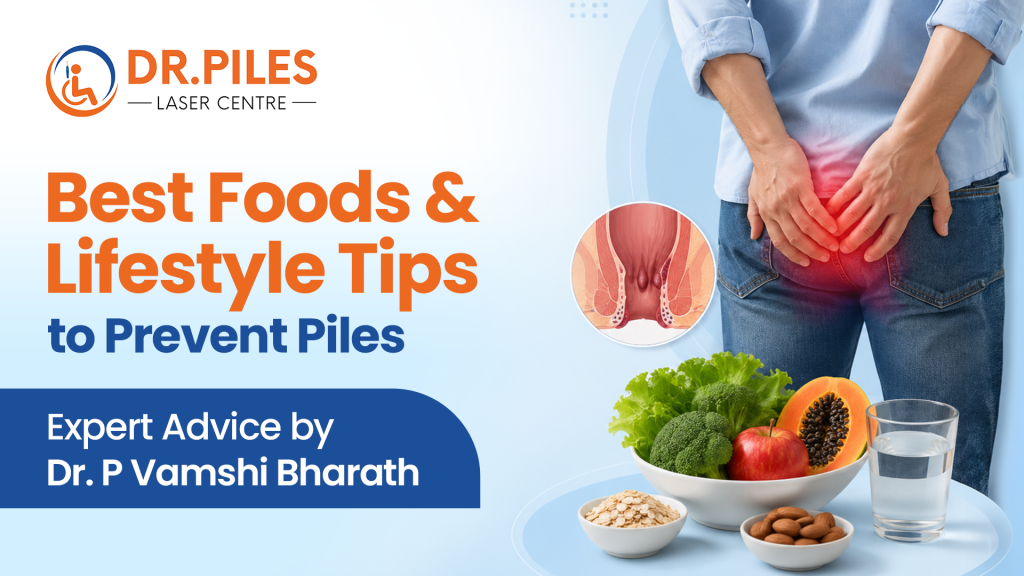
Piles, also known as haemorrhoids, are swollen veins in the rectum or anus that can cause pain, itching, bleeding, and discomfort during bowel movements. While modern treatments can effectively manage piles, the best approach is prevention. Your daily eating habits, hydration, and lifestyle play a significant role in maintaining healthy bowel movements and reducing the risk of developing piles.
According to Dr. P. Vamshi Bharath, maintaining a fiber-rich diet, staying physically active, and avoiding prolonged constipation are some of the most effective ways to prevent piles naturally. Whether you’ve experienced piles before or want to reduce your risk, adopting healthy habits can make a lasting difference.
What Causes Piles?
Piles develop when increased pressure is placed on the veins in the lower rectum. Common causes include:
- Chronic constipation
- Straining during bowel movements
- Sitting on the toilet for long periods
- Low-fiber diet
- Pregnancy
- Obesity
- Lack of physical activity
- Frequent heavy lifting
- Chronic diarrhea
Fortunately, many of these risk factors can be managed through proper diet and lifestyle changes.
Why Diet Matters in Preventing Piles?
A healthy digestive system depends on soft, regular bowel movements. Foods rich in fiber absorb water, increase stool bulk, and help stools pass easily without excessive straining.
A balanced diet also supports gut health, reduces constipation, and minimizes inflammation in the digestive tract.
Best Foods to Prevent Piles
1. High-Fiber Fruits
Fruits are excellent sources of dietary fiber and natural hydration.
Choose fruits like:
- Apples (with skin)
- Pears
- Guava
- Papaya
- Oranges
- Bananas
- Berries
- Figs
These help soften stools and improve bowel regularity.
2. Green Leafy Vegetables
Vegetables provide fiber, vitamins, and antioxidants that improve digestion.
Include:
- Spinach
- Fenugreek leaves
- Amaranth
- Broccoli
- Cabbage
- Carrots
- Beetroot
Aim for at least two servings of vegetables daily.
3. Whole Grains
Replace refined grains with whole grains such as:
- Brown rice
- Oats
- Whole wheat
- Millets
- Quinoa
- Barley
These provide both soluble and insoluble fiber that supports digestive health.
4. Legumes and Pulses
Protein-rich foods that also contain plenty of fiber include:
- Lentils
- Chickpeas
- Kidney beans
- Green gram
- Black gram
- Peas
These improve bowel movements while providing essential nutrients.
5. Nuts and Seeds
Healthy fats and fiber together support better digestion.
Good options include:
- Flaxseeds
- Chia seeds
- Almonds
- Walnuts
- Pumpkin seeds
Consume in moderation.
6. Plenty of Water
Fiber works effectively only when your body is well hydrated.
Drink:
- 2–3 liters of water daily
- Coconut water
- Fresh lemon water
- Buttermilk
- Soups
Avoid relying on sugary drinks.
7. Probiotic Foods
Healthy gut bacteria improve digestion and reduce constipation.
Include:
- Curd
- Yogurt
- Buttermilk
- Homemade fermented foods
Foods to Avoid if You Want to Prevent Piles
Certain foods may worsen constipation or irritate the digestive system.
Limit:
- Processed foods
- Fast food
- Deep-fried snacks
- Excessively spicy foods
- White bread
- Refined flour products
- Sugary desserts
- Carbonated drinks
- Excess alcohol
- Excess caffeine
These foods may contribute to hard stools and digestive discomfort.
Simple Daily Routine for Piles Prevention
Morning:
- Drink 1–2 glasses of water after waking up.
- Eat a fiber-rich breakfast.
- Walk for 20–30 minutes.
Afternoon:
- Include vegetables, whole grains, and curd with lunch.
- Stay hydrated.
Evening:
- Snack on fruits or nuts instead of processed foods.
- Stay active and avoid prolonged sitting.
Night:
- Eat a light dinner.
- Drink enough water.
- Sleep for 7–8 hours.
Early Warning Signs of Piles
Consult a specialist if you notice:
- Blood during bowel movements
- Pain while passing stool
- Anal itching
- Swelling around the anus
- A lump near the anus
- Mucus discharge
- Persistent constipation
Early diagnosis can prevent complications and reduce the need for surgery.
When Lifestyle Changes May Not Be Enough
While healthy habits are highly effective for prevention and managing mild piles, medical evaluation is important if symptoms persist or worsen.
Seek medical attention if you experience:
- Frequent rectal bleeding
- Severe pain
- Large prolapsing piles
- Recurrent hemorrhoids
- Symptoms lasting more than a week despite home care
- Unexplained weight loss or changes in bowel habits
Modern treatments, including minimally invasive procedures and laser surgery, offer faster recovery with less discomfort when indicated.
Expert Advice by Dr. P. Vamshi Bharath
“Preventing piles starts with healthy daily habits. A fiber-rich diet, adequate hydration, regular exercise, and proper bowel habits are the foundation of good digestive health. Early intervention and lifestyle modifications can prevent many cases of piles and reduce the need for surgical treatment.”
Frequently Asked Questions (FAQs)
1. What is the best food to prevent piles?
Fiber-rich foods such as fruits, vegetables, whole grains, and legumes are among the best foods to prevent constipation and reduce the risk of piles.
2. How much fiber should I eat daily?
Most adults should aim for 25–35 grams of fiber per day, along with adequate water intake.
3. Can drinking more water prevent piles?
Yes. Proper hydration helps soften stools, making bowel movements easier and reducing strain.
4. Does sitting for long hours increase the risk of piles?
Yes. Prolonged sitting, especially without regular movement, can increase pressure on the rectal veins and contribute to piles.
5. Can exercise help prevent piles?
Absolutely. Regular physical activity promotes healthy bowel movements, reduces constipation, and helps maintain a healthy weight.
6. Are spicy foods the main cause of piles?
No. Spicy foods do not directly cause piles, but they may worsen symptoms in some individuals with existing hemorrhoids.
7. When should I consult a doctor for piles?
Seek medical advice if you have persistent bleeding, severe pain, a prolapsed hemorrhoid, or symptoms that do not improve with lifestyle changes.
Healthy Habits Are the Best Defense Against Piles
Preventing piles is often easier than treating them. By following a fiber-rich diet, staying hydrated, exercising regularly, maintaining healthy bowel habits, and avoiding prolonged straining, you can significantly reduce your risk of developing hemorrhoids.
If you notice symptoms such as rectal bleeding, pain, or persistent discomfort, don’t ignore them. Early consultation with an experienced colorectal specialist like Dr. P. Vamshi Bharath ensures timely diagnosis, effective treatment, and long-term relief.
Book a consultation today. Call +91 9676479069
Visit our website: https://drlaserpilescenter.com/#about